Ayurveda and the Intelligence of Personal Rhythm
What a traditional system can teach about living as an individual in time.
“Modern life offers one tempo and calls it discipline. The older wisdom asked a different question: not how fast, but in what rhythm, and whose.”
We have largely agreed, without deciding to, that a life should run at one constant speed. The same output on a low day as a strong one. The same demands in deep winter as in high summer. The same tempo at every hour, sustained by stimulants when the body objects. We treat our own variation, the natural rise and fall of energy across a day, a season, a life stage, as a flaw to be medicated or overridden rather than a pattern to be worked with.
An older way of thinking about the body took the opposite view.
The Private Theory
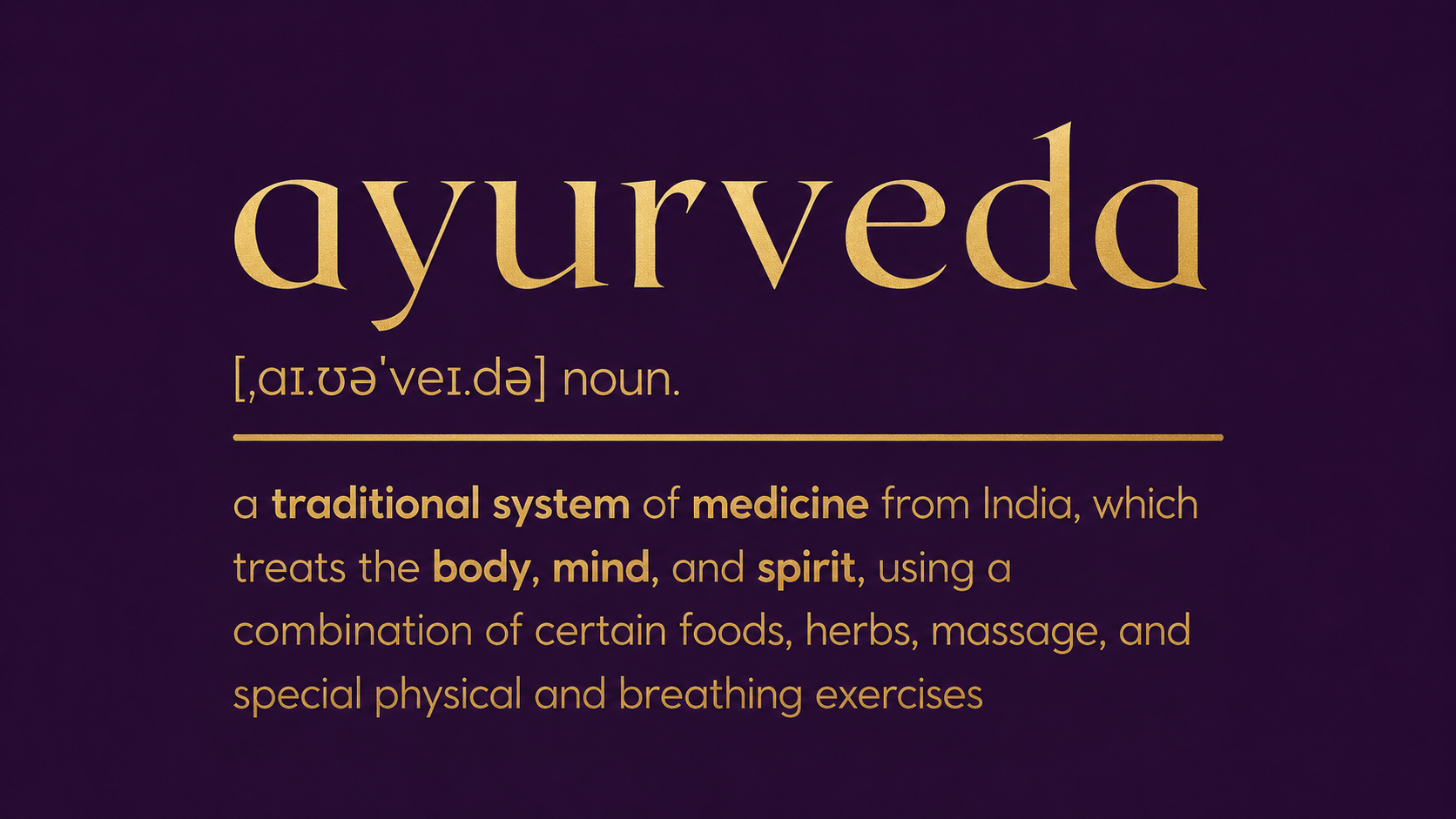
Ayurveda is a traditional system of medicine from the Indian subcontinent, developed over thousands of years. Set aside, for a clear-eyed moment, its specific medical claims, which sit outside modern clinical evidence and are not the point here. What remains, and what is genuinely useful, is a governing intuition: that you are a particular constitution, not a generic body, and that you are living inside time, days, seasons, stages, each with its own character. The tradition builds daily rhythm and seasonal adjustment directly into how a person is meant to live.
So the Private Theory is this. The transferable gift of Ayurveda is not a diagnosis. It is the reintroduction of rhythm as a category of self-governance. Modern life flattens rhythm into a single relentless tempo and then calls the resulting exhaustion a personal failing. Reclaiming rhythm, honoring that you are different in the morning than at night, different in winter than in summer, different at this stage of life than the last, is a form of self-respect and, quietly, of power. You govern yourself better when you govern with your rhythm rather than against it.
The Integrated Lens
Physical. The body genuinely does run on cycles: daily, seasonal, hormonal. Living against them costs something. Living with them returns something. You do not need the metaphysics to notice the pattern.
Cultural. The single-tempo life is a modern industrial arrangement, not a law of nature. Traditional systems that built in rhythm are, in this narrow respect, more attuned to the body than the schedule we have inherited.
Psychological. There is relief in permission to vary. When you stop demanding identical performance from every day, the low days stop being evidence against you.
What This Has to Do With Power
To govern yourself in rhythm rather than in defiance of it is to work with your own system instead of against it. The person who plans demanding work for her strong hours and restoration for her low ones is not less disciplined than the person who grinds identically through both. She is more effective, and more sustainable, because she is governing a real body rather than an imaginary machine. Rhythm is not the enemy of standards. It is how standards survive contact with a human life.
The Quiet Practice
This week, notice your own daily rhythm without judgment: when your energy naturally rises, when it dips, when your focus is sharpest and when it fades. Do not fight the pattern. Just map it. Then place one important task in your strong window and one genuine rest in your low one, and feel the difference between working with the rhythm and against it.
What would change if you planned your days around your real rhythm instead of a single imagined tempo?
Continue the private study. Subscribe to receive new essays on embodied self-mastery, personal power, nervous system capacity, and the conditions that shape a self-directed life.
Read differently. Live deliberately.
Subscribe to A Private Theory of Power for essays and the introductory email sequence from distinctcharacter.blog. Unsubscribe through any journal email. Privacy Policy.
Source Notes
- Traditional wellness perspective: Ayurveda is a traditional Indian system organized around individual constitution (the three doshas, vata, pitta, and kapha) and around daily and seasonal routine. Presented here as a traditional and philosophical perspective on rhythm, not as medical diagnosis or treatment.
- Research and clinical literature: Human physiology follows circadian and seasonal patterns; misalignment with them carries costs. This general point is independent of Ayurvedic theory.
- Psychological interpretation: The reading of Ayurveda’s transferable gift as “rhythm as self-governance” is the author’s.
- Founder observation: The modern demand for identical performance across unlike days.
© 2025 Distinct Character
Read next: The Integrated Self-Mastery Review.