Rest and Digest Is a Way of Living
Why the state your body repairs in is not a spa day but a daily requirement.
“A life organized around permanent readiness leaves too little room for recovery. Rest deserves a place before exhaustion has to argue for it.”
Consider what your body is never given time to finish. Digestion interrupted by the next demand. Repair postponed because the system is still braced. Reflection that never arrives because there is no moment quiet enough to have it. Many capable women live in a state of low, continuous activation, not dramatic stress, just a hum of readiness that never fully switches off, and they wonder why they feel simultaneously exhausted and unable to settle.
Activation and recovery are useful shorthand, not two mutually exclusive settings.
The Private Theory
The sympathetic and parasympathetic branches of the autonomic nervous system regulate different functions in coordinated and sometimes overlapping ways. They are not a single on-off switch. Stress can affect digestion and other bodily processes, but the body does not stop all maintenance whenever you are alert. The useful question is whether your life allows adequate rest, not whether you have achieved a pure recovery state.
So the Private Theory is this. “Rest and digest” is not a wellness moment to schedule occasionally between periods of real life. It is a physiological condition your body needs to inhabit regularly in order to function at all. Safety is not a feeling to chase. It is a state to return to. A life that never lets the body down-shift is a life running its maintenance at a permanent deficit, and the bill accrues quietly until it doesn’t.
The Integrated Lens
Physical. Stress can affect gastrointestinal function, and a less hurried meal may feel more comfortable. Digestive symptoms have many possible causes; relaxation is not a substitute for assessment when symptoms persist or concern you.
Emotional. Constant low activation feels normal after a while precisely because it is constant. Many people do not recognize their own baseline tension until they feel it release, and are surprised by how much they were holding.
Environmental. The recovery state is easier to enter in some conditions than others. Noise, urgency, screens, and clutter keep the system mildly braced. The state is partly a product of the environment you place yourself in.
What This Has to Do With Power
Being able to settle when circumstances allow can create room for reflection and more deliberate decisions. No one can guarantee a settled state at will. Recovery also depends on sleep, health, safety, and demands that an individual may not control.
The Quiet Practice
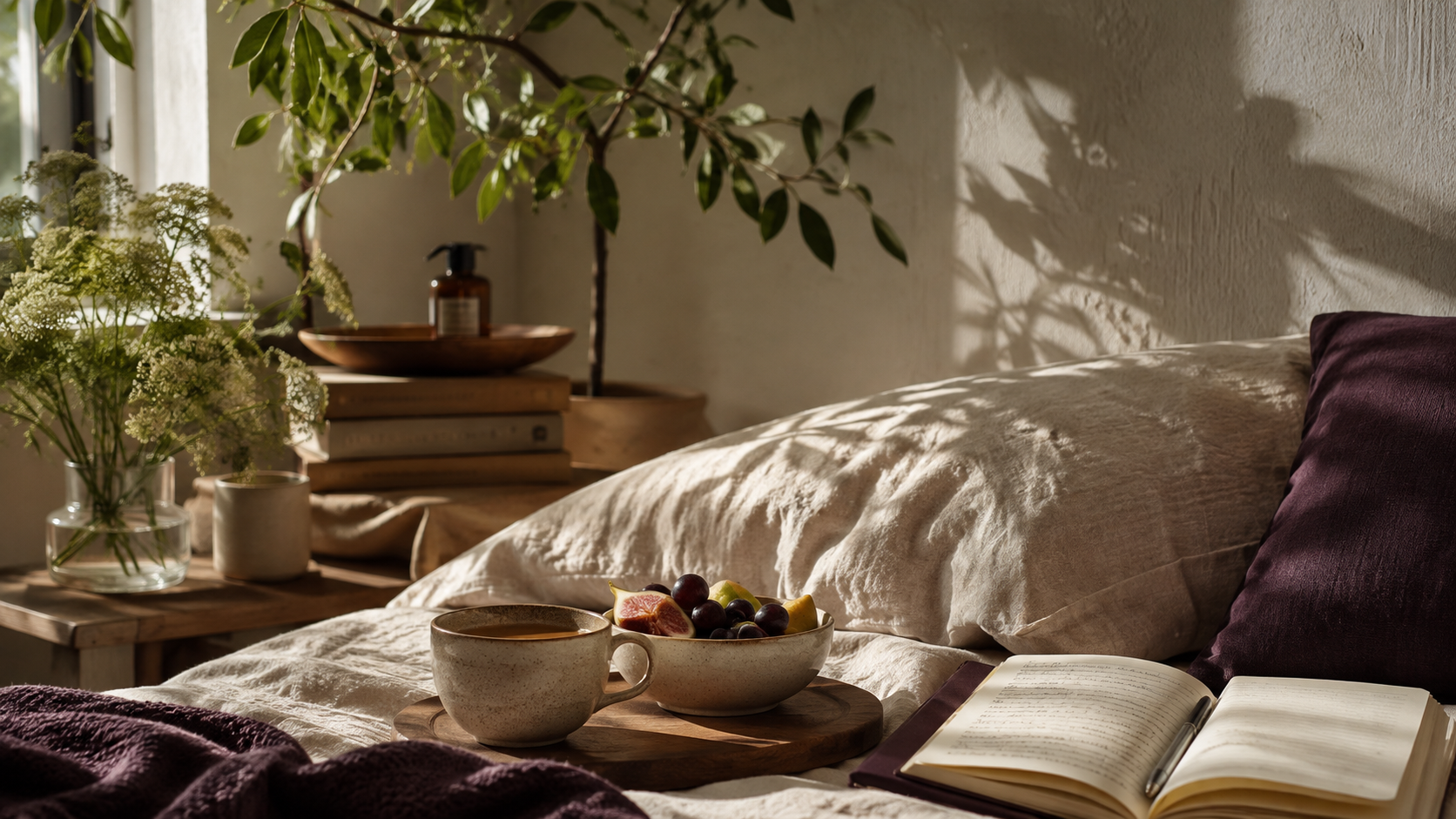
Eat one meal this week in a genuinely settled state. No screen, no standing, no bracing for the next thing. Sit, slow down, and let the body register that it is safe enough to digest. Notice how different the same food feels when eaten from recovery rather than from readiness.
When was the last time your body was allowed to be fully off-duty?
Continue the private study. Subscribe to receive new essays on embodied self-mastery, personal power, nervous system capacity, and the conditions that shape a self-directed life.
Read differently. Live deliberately.
Subscribe to A Private Theory of Power for essays and the introductory email sequence from distinctcharacter.blog. Unsubscribe through any journal email. Privacy Policy.
Source Notes
- Research and clinical literature: Berntson and colleagues (1994), Autonomic space and psychophysiological response describes autonomic control on separate sympathetic and parasympathetic dimensions. This is why the essay does not treat activation and recovery as exclusive states. The broader argument about making room for rest is an editorial interpretation.
- Traditional perspective: Many traditions ritualize settling before eating, an intuition consistent with the physiology.
- Psychological interpretation: The framing of recovery as a way of living rather than an occasional event is the author’s.
- Founder observation: Feeling exhausted and unable to settle at the same time.
© 2025 Distinct Character
Read next: Movement Without Punishment.